
Why Major Hotel Chains Are Rethinking Uniform and Linen Distribution
Walk into the back of house of almost any large hotel and you'll find a version of the same scene. Trolleys stacked with clean linen, a rail of uniforms waiting to be sorted, and a small team working through a mountain of garments that never seems to get any smaller. It's been this way for decades.
And for a long time, nobody questioned it much.

The pressure has been building quietly
Labour costs have risen sharply across hospitality, and the back-of-house operation absorbs a disproportionate share of that pain. Linen rooms, uniform distribution, laundry processing are tasks that require people, time and a level of coordination that looks straightforward from the outside and really isn't.
The other thing that's changed is expectations. Not guest expectations, though those matter too. The expectations of the people running these operations. A General Manager who has spent three years watching their food and beverage operation get leaner and smarter is going to start asking hard questions about why the uniform room still runs the same way it did in 1987. That conversation is happening more and more.
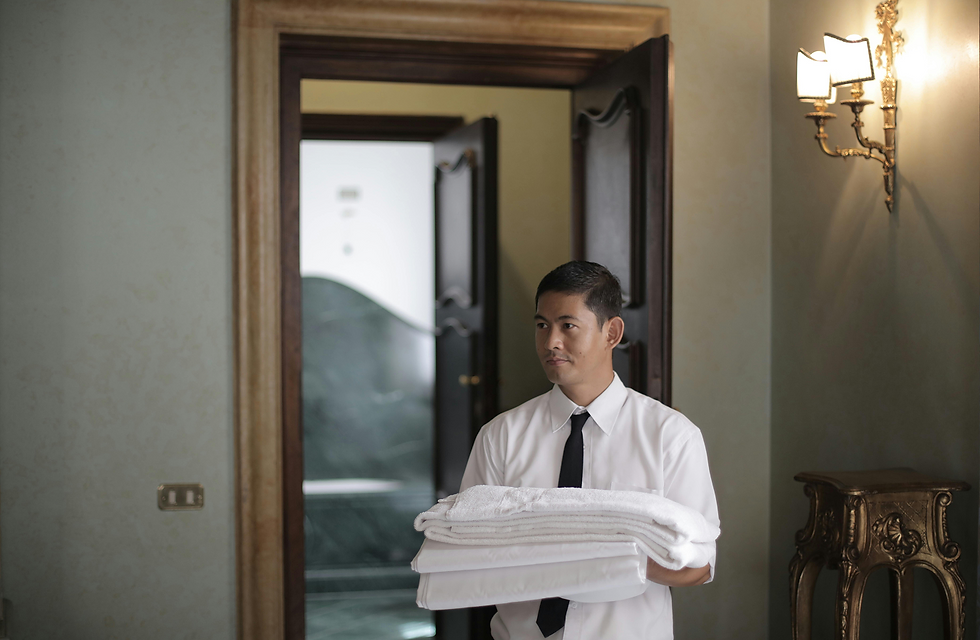
The linen room problem
Here's something that doesn't get said often enough. Linen distribution is one of those challenges that the industry has historically solved by throwing people at it rather than fixing the underlying system. Demand spikes? Bring more staff in. Items going missing?
Do a manual count. Stock drifting out of alignment with what's actually available on the floor? Chase it up individually.
None of that is anyone's fault. It's what happens when you're managing hundreds, sometimes thousands, of items through a process that relies heavily on memory, habit and whoever happens to be on shift that morning. It works until it doesn't. And when it doesn't, it tends to go wrong at the worst possible moment.
Why automation is starting to make sense
The honest answer is that the technology isn't new. Automated garment handling systems have been running in dry cleaning operations and e-commerce warehouses for the better part of twenty years. Hospitality has been slower to adopt them, partly because the upfront cost looked daunting, and partly because there's a conservatism in hotel operations that's not always rational but is very human.

What's changed is the calculation. When labour costs rise, when the cost of errors becomes more visible, when a competitor installs a system and suddenly their housekeeping team is running more smoothly than yours, the conversation shifts.
The systems themselves are genuinely straightforward in practice, whatever the spec sheet might suggest. A member of staff arrives for their shift, collects their uniform from a terminal, and returns it at the end. The system tracks everything in between. No queuing, no searching, no one manually matching garments to employees at six in the morning. For managers who have spent years firefighting the morning rush, that's not a small thing.
The space argument
This one surprises people. Traditional uniform and linen storage takes up a lot of room. Locker banks, hanging rails, shelving, trolley parking. In a city-centre hotel where the cost per square foot is eye-watering, you start to look at that space differently.
Automated systems work vertically. A conveyor-based setup can handle thousands of garments in a fraction of the floor space of a conventional uniform room. Several properties that have made the switch have found themselves with a room they didn't know they had. What they do with it varies. Additional storage, improved staff facilities, sometimes just a better-organised back-of-house that makes everything around it run more smoothly. But the space is there.
What about the staff?
Every time automation comes up in hospitality, the same anxiety surfaces. Worth addressing it plainly. These systems don't replace housekeeping teams. The work of running a hotel, turning rooms, managing guests, holding the whole thing together during a difficult Saturday night, is human work, and no conveyor system changes that.
What it does do is remove the friction that surrounds the work. When a housekeeper doesn't have to wait for a uniform, when a linen runner has accurate information about what's actually available rather than what was available an hour ago, when a manager isn't spending the first ninety minutes of their shift sorting out a distribution problem that shouldn't exist, that time doesn't vanish. It goes back into the operation, into the team, into the guest experience.
That's the argument, and it's a good one.

The shift is already happening
Some of the most recognisable hotel brands in the UK have already made this move. They're not talking about it loudly, because operational advantage tends not to get announced in press releases. But the installations are there, and the results are consistent. Fewer errors, less waste, more predictable mornings, and staff who actually prefer the new system once they've used it for a week.
For operators still running these processes manually, the question isn't really whether automation is worth looking at. It's whether the current system is actually as under control as it appears, and whether the answer would survive a hard look at what the morning rush really costs.

Comments